What changes for your business.
Each service starts from a problem you will recognise and ends in a result you can measure: hours returned, enquiries answered, figures you can trust. Start with the one that costs you most today.
Automating routine work
Give the repetitive work to software, and the judgement back to your people.
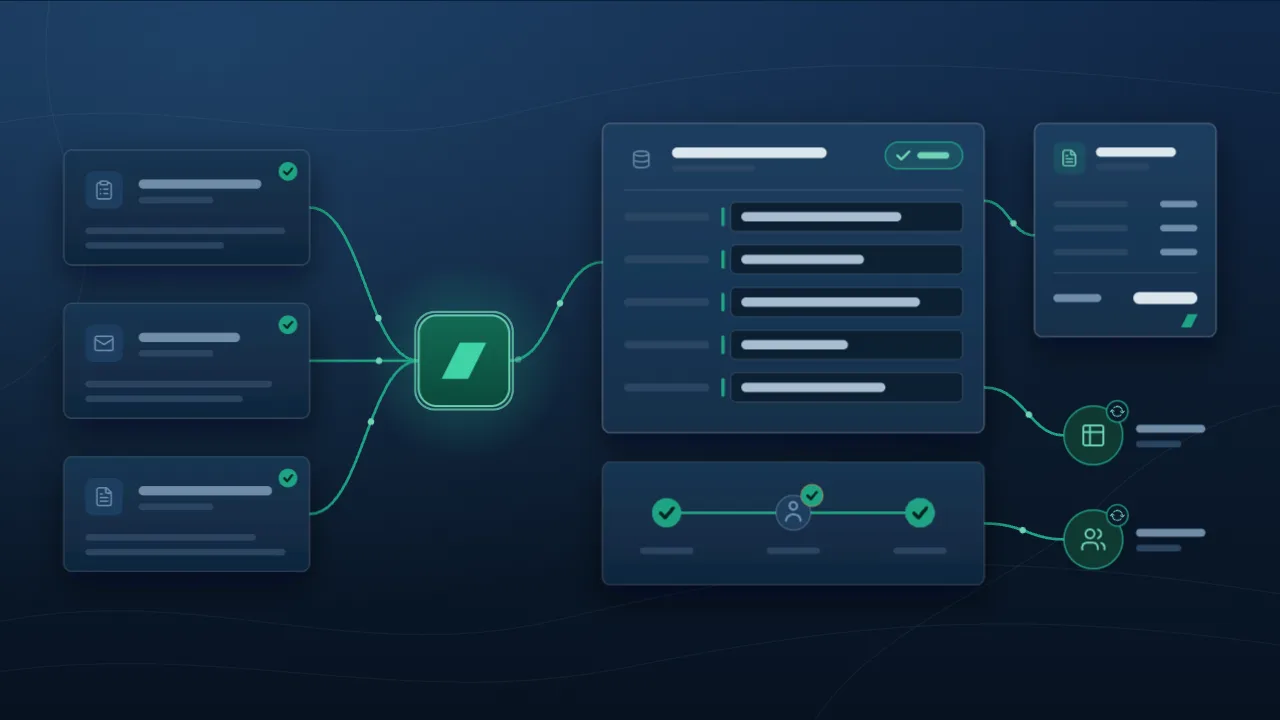
Forms, emails and documents arrive as they do today, and nobody has to re-key them.
Every detail lands in the right record once, without copying mistakes.
Approvals reach their owner and are followed up until they are signed off.
Invoices and reports produce themselves. Your people spend the time on work that needs them.
The problem
Capable people lose hours every week copying information between systems, chasing approvals and answering the same questions. The work has to be done, but done by hand it is slow, error-prone and invisible until something is missed.
What changes
Routine work runs on its own, on time and the same way every time. Your team handles the exceptions and the conversations that need a person.
What you get
- Details from forms, email and documents captured without retyping
- Approvals and hand-offs that reach a named owner instead of stalling
- Reminders, follow-ups and notifications that go out on time
- Quotes, invoices, contracts and reports that produce themselves
- Records that stay in step across your tools
Who it’s for
- Teams whose week is dominated by administration
- Processes that depend on one person remembering
- Organisations adding volume faster than headcount
AI that reads and sorts requests
AI where it earns its place, with people in control of what matters.
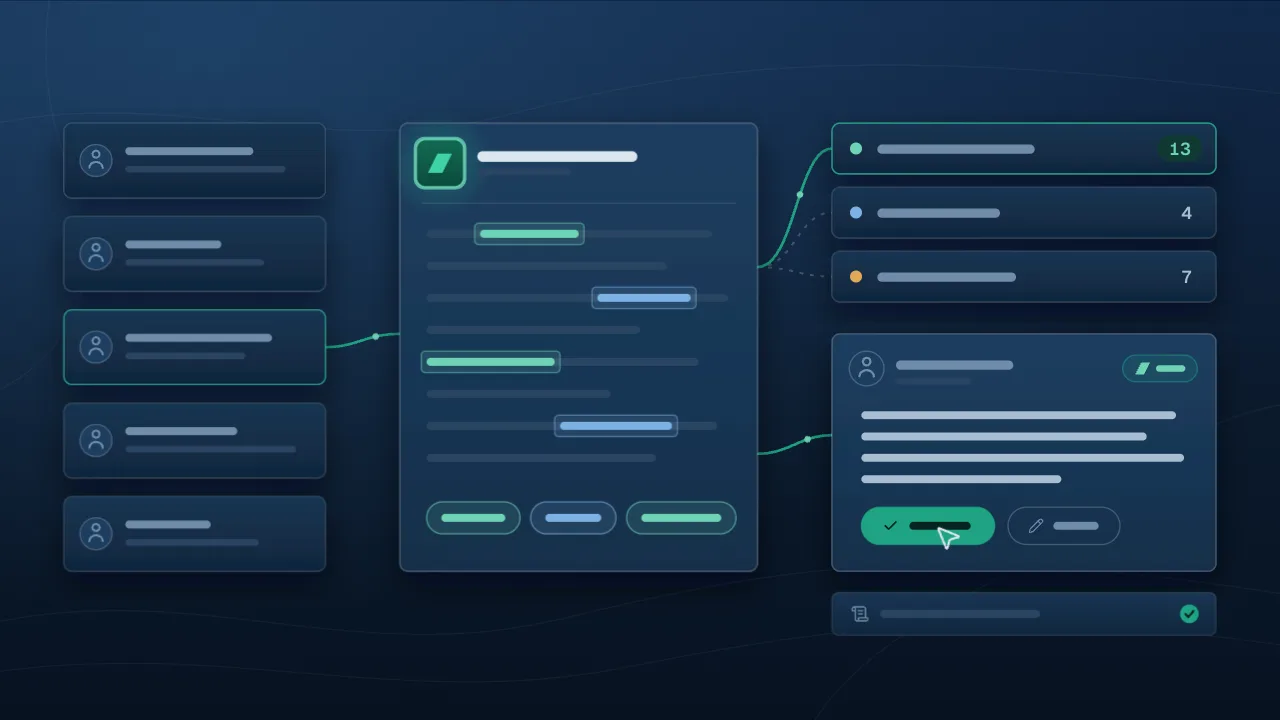
Requests and documents are read the moment they arrive, in any form.
Names, amounts and deadlines are picked out, so nobody reads everything twice.
Each request reaches the right queue without anyone sorting the pile.
Your team starts from a ready draft and makes the call. Every step is on record.
The problem
Some work can’t be reduced to fixed rules. Requests arrive as free text, documents vary, and someone has to read everything before anything happens. As volume grows, that reading becomes the bottleneck.
What changes
Incoming information is read, sorted and summarised as it arrives. Staff start from a draft and a recommendation, and every consequential decision stays with a person.
What you get
- Messages, requests and tickets sorted and routed as they arrive
- Forms, invoices and contracts read, with the key details pulled out
- Drafted replies and summaries your staff review instead of writing
- Internal assistants that answer from your own policies and records
- Review steps, logs and firm limits, so people stay in control
Who it’s for
- High volumes of unstructured requests or documents
- Teams answering the same questions in many forms
- Leaders who want AI adopted carefully, with oversight
Customer enquiries and sales follow-up
Answer every enquiry, and know what happened to each one.
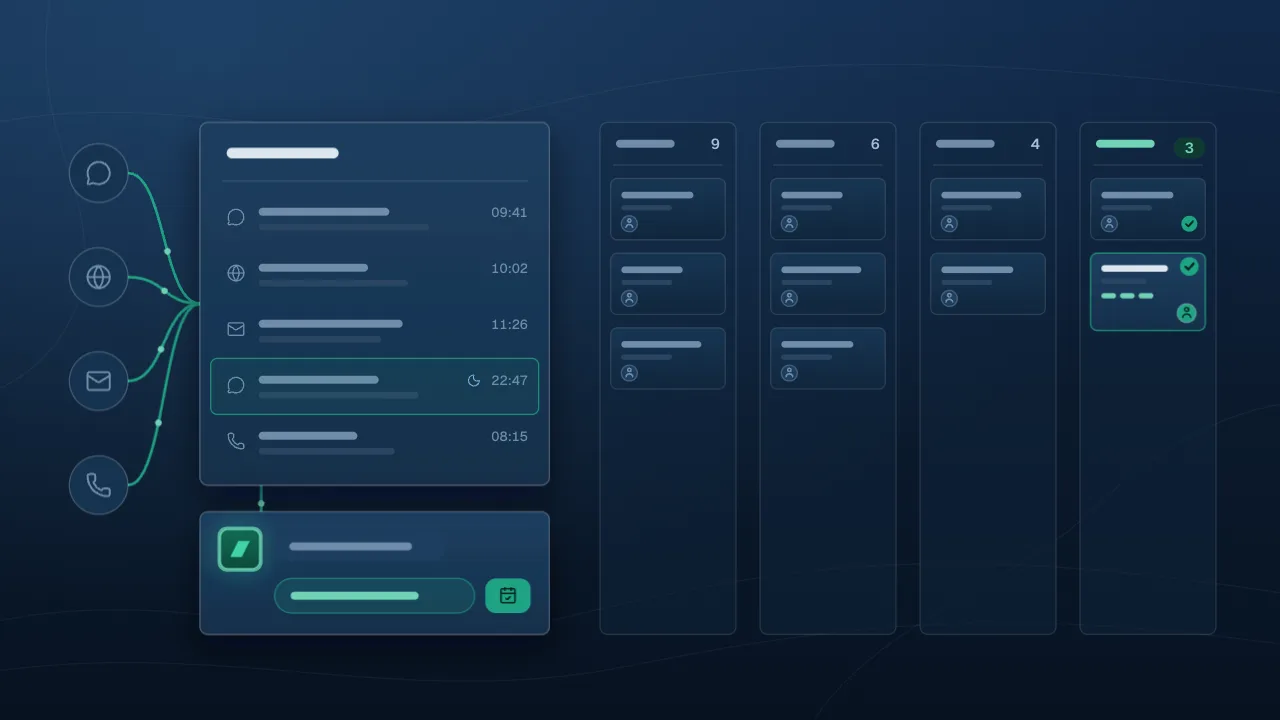
WhatsApp, the website, email and calls all land in one inbox.
After hours, enquiries are answered, qualified and booked instead of waiting for morning.
Each lead is scored and reaches the person or branch best placed to close it.
Follow-up runs on time until a person takes over, from first message to signed deal.
The problem
Enquiries arrive through WhatsApp, the website, phone calls, email and walk-ins. Response times depend on who is free, follow-up depends on memory, and nobody can say with confidence how many sales slipped away last month.
What changes
Every enquiry is recorded once, answered quickly and owned by someone. Follow-up happens on schedule, and you can see the whole pipeline from first message to signed deal.
What you get
- Enquiries answered, qualified and booked outside working hours
- One inbox for WhatsApp, web forms, email and calls
- Every lead scored and sent to the right person or branch
- Follow-ups that run on schedule and stop when a person steps in
- A clear view of your pipeline and response times
Who it’s for
- Businesses that sell through conversations
- Teams losing enquiries outside working hours
- Sales operations across several branches or product lines
Websites and online booking
A digital presence that performs as well as it looks.
A fast, credible site your team can update without a developer.
Clients book or manage a service themselves, at any hour.
Every booking and enquiry reaches your team the moment it is made.
You see which pages and campaigns bring in business, so spending goes where it pays.
The problem
For many clients, your website is the first serious impression. Too often it is slow on a phone, hard to update, disconnected from the team that follows up, and silent about whether it is working.
What changes
A fast, clear, credible site or platform that brings in qualified enquiries, sends them straight into your operation and shows you what is working.
What you get
- A corporate or marketing site that wins trust at first glance
- Customer portals where clients book and serve themselves
- Campaign pages tied to results you can measure
- Content your team can update without a developer
- Fast, accessible pages that search engines can find
Who it’s for
- Organisations whose website no longer reflects their standard
- Services that could be booked or managed online
- Teams that need to update content without help
Internal systems and dashboards
One place to run the business from.
Work lives in spreadsheets, chat groups and people’s heads, and status meetings fill the gaps.
Requests, approvals and records move into one portal, so nothing is lost between tools.
Each team, branch and partner gets the workspace it needs, and nothing it doesn’t.
Leadership sees current numbers at any time. The report assembles itself.
The problem
Operational knowledge lives in spreadsheets, chat groups and people’s heads. Managers assemble reports by hand, status meetings exist to find out what is happening, and every new hire takes weeks to learn where things are.
What changes
Work, records and figures sit in one system shaped around how your organisation runs. Leadership sees current numbers without asking for them, and the team knows where everything is.
What you get
- Internal portals for requests, approvals and records
- Dashboards with today’s figures, not last month’s
- Workspaces for each team, branch and partner
- Proper systems in place of business-critical spreadsheets
- Reports that assemble themselves
Who it’s for
- Organisations run on spreadsheets and chat groups
- Leaders who wait days for accurate figures
- Growing teams spread across several sites
Custom software and technology advice
When the right tool doesn’t exist, build it properly.
We review the systems and vendors you already pay for, before you spend more.
We find the part of your process no product fits. That is often where your advantage sits.
A prototype tests the idea before you commit to a full build.
A phased roadmap for what comes next, with a technical partner beside you.
The problem
Off-the-shelf software covers the common case, and your advantage often sits in the part it misses. Meanwhile, technology decisions get made one vendor pitch at a time, without a view of how the pieces should fit.
What changes
A clear plan for where technology will pay back first and, where it is justified, custom software built to the standard of the best commercial products.
What you get
- A roadmap showing where technology pays back first
- An honest assessment of your current systems and vendors
- Custom applications and integrations, built to last
- Prototypes that prove an idea before you invest fully
- A technical partner who stays as you grow
Who it’s for
- Organisations with a process no product fits
- Leaders planning significant technology spend
- Businesses preparing to scale into new markets

Not sure where to start?
Most engagements begin with the Understand stage, a short and focused look at how work moves today. It usually makes the right starting point obvious, and the first conversation is free.